
Spotting Praying Mantis Species: Easy Tips for Nature Lovers
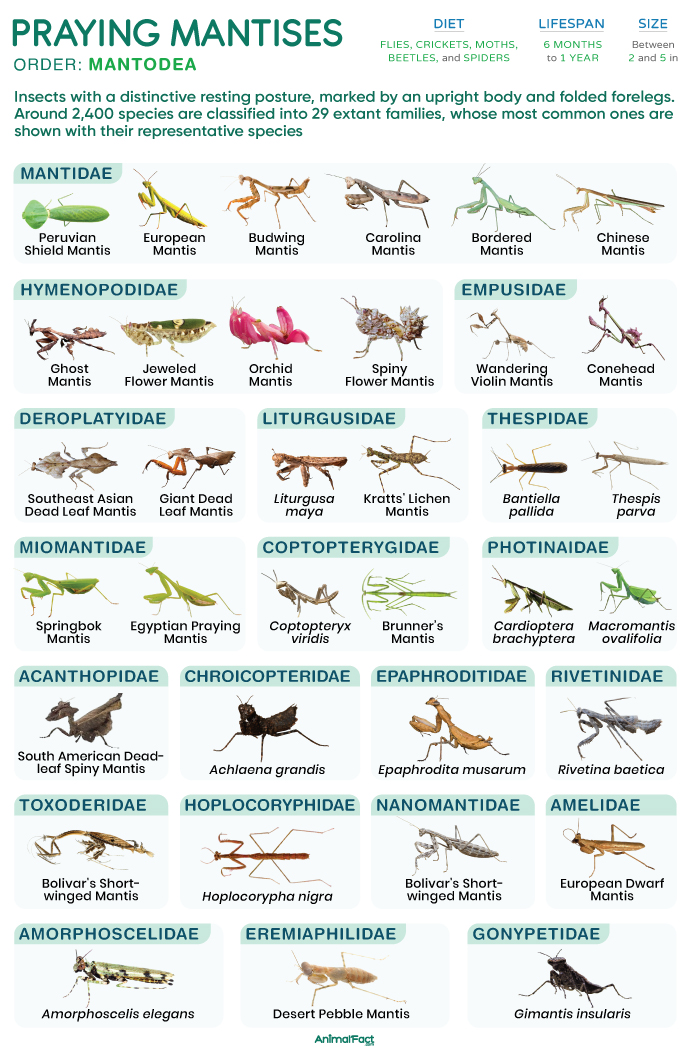
How to Identify Different Praying Mantis Species: A Practical Field Guide
Spotting a praying mantis is always exciting, but figuring out which species you’re looking at can quickly turn into a confusing guessing game. I remember my first attempts, squinting at a green insect and flipping through photos online, convinced I’d found something rare. Most of the time, I was wrong. Here’s how I learned to get it right, and how you can too.
Color Tricks Your Brain: Why Most First Guesses Are Off
It’s tempting to rely on color: green means local, brown means unusual. But color isn’t reliable for mantis ID. Even the same species can be bright green one week and dusty brown the next, depending on age or recent molts. Sunlight and shadows play tricks too.
I had to learn to ignore my first impressions and look for details that don’t shift so easily.
What Actually Matters: The Features That Separate Species
Here’s the checklist I use in the field, one that finally got me past endless second-guessing:
- Body Shape
Is the neck (thorax) long and slender, or short and thick? For example, Chinese mantises have a stretched-out “neck,” while Carolina mantises are more compact. - Front Leg Markings
Look inside the front legs for spots or colored rings. European mantises usually show distinct black-ringed “eye” spots here, a feature that doesn’t change with age. - Wing Details
Examine the wings’ edges and veins. Some species have bold stripes or clear eye-spots; others are plain or finely veined. - Size (With Reference)
Measure against your finger or another object in your photo for scale, size alone can rule out most options. - Location and Habitat
Where did you find it? Region narrows your choices quickly (more below).
If you follow this order instead of jumping straight to color or general “feel,” you’ll catch things your brain would otherwise skip.
Composite Example: When a Hunch Led Me Astray
Early on, I spotted an olive-green mantis in my garden and assumed it was a native Carolina mantis, mostly because that’s what I hoped it was. A more experienced naturalist pointed out a thin brown stripe along its wing edge in my photo, a dead giveaway for a Chinese mantis in my area.
That misstep stuck with me: snap judgments feel satisfying but usually miss subtle clues.
Why Region Is Your Best Shortcut
Don’t try to memorize every species worldwide; focus on what actually lives near you.
- In eastern North America, if you find a large mantis (over 8 cm) with brown-edged wings, it’s almost always a Chinese mantis.
- In southern Europe, green mantids with black-ringed foreleg spots are usually European mantises.
- Urban gardens often host introduced species, don’t assume every green mantis is native.
Most field guides organize by region for good reason: location filters out dozens of unlikely options before you even start comparing features.
When Photos (and Memory) Fail: Where IDs Go Wrong
Sometimes even careful checking won’t give you an answer right away:
- Overexposed photos wash out markings
- Juveniles lack adult wing features
- Males may look much thinner than females
- City parks might hide non-native or hybridized individuals
When stuck, take new photos from several angles under natural light and note exactly where and when you found it. Uploading these details to iNaturalist.org or BugGuide.net often gets you expert feedback within hours.
Concrete Comparisons: Side-by-Side Differences That Matter
These quick contrasts make tricky pairs easier:
- Chinese vs European Mantis:
Chinese mantis is larger (often over 10 cm), has a pale face and brown wing edges; European is smaller (6–7 cm) with black-ringed spots inside front legs. - Carolina vs Chinese Mantis:
Female Carolina mantises have short wings that leave the abdomen exposed from above, a reliable clue up close. - Orchid vs Giant African Mantis (in captivity):
Orchid mantises have petal-shaped legs; Giant Africans are big, solid green, with solid bodies, it’s hard to mix them up once you look at leg shape.
Focus on two or three stable traits rather than scanning back and forth across dozens of vague similarities.
What To Do When You’re Still Not Sure
If identification still feels uncertain:
- Check if your specimen is an adult (are wings fully developed?).
- Take new photos from top, side, and head-on views.
- Write down exact location and date, seasonal timing can hint at migratory or emerging species.
- Post your evidence on an expert forum with all details included.
Most mistakes come not from lack of knowledge but missing details, more context usually leads to an answer.
Frequent Mistakes (And How To Avoid Them)
From experience, here’s where most people trip up:
- Jumping to conclusions based on gut feeling
- Ignoring regional context
- Skipping clear photos of key features
- Trusting color over structure
Every time I’ve misidentified a mantis, it came down to one of these habits, not because I didn’t know enough facts.
A Simple Observation Routine That Works Every Time
To boost your accuracy fast:
- Photograph each new mantis from three angles: top, side, front.
- Record date and precise location as soon as possible.
- Consult one regional field guide plus one online community for cross-checks.
- Note any unusual behaviors or habitats observed.
- Keep notes on confirmed IDs so patterns become clear over time.
Think of each identification as practice rather than a test, you’ll get better with every attempt, even if you start off unsure.
With patience and attention to detail, not just color, you’ll soon find that identifying praying mantis species becomes less about lucky guesses and more about spotting dependable clues right in front of you.

